After the Push: Why We Choose Repair Over Punishment at Nursery
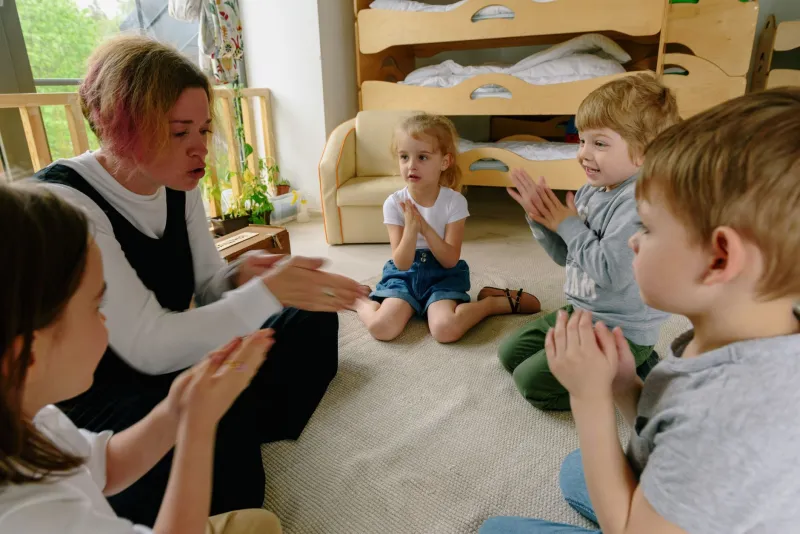
The thud comes before the cry. You're in the middle of snack, or halfway through a story, and suddenly one child has a red mark on their arm and another is standing over them, toy in hand. It's the moment every parent and every practitioner dreads.
At Little Oaks Montessori, we don't reach for a naughty chair. We reach for something slower and, frankly, harder: repair.
Why punishment misses the point
A three-year-old who pushes isn't plotting. Their brain is still building the wiring for impulse control, empathy and language. When they snatch a tractor or shove a friend, they're not 'being naughty'—they're showing us a skill they haven't learned yet. Maybe it's turn-taking. Maybe it's how to ask. Maybe it's what to do with a big feeling that arrives faster than words.
A naughty chair or a stint on the thinking step might stop the behaviour for a minute. But it doesn't teach the missing skill. Worse, it can teach a child that they're only acceptable when they're good—and that mistakes make them bad. In Montessori, we see the child as capable and kind, but still practising. Our job is to coach, not to shame.
Step one: the hurt child comes first
This isn't about ignoring the child who hurt someone. It's about order. The child who is crying, bleeding or frightened needs to know they're safe and that an adult is on their side.
Script: 'Ouch, that looks sore. I'm here. Let's get you some cold water and a cuddle.'
You're not asking 'What happened?' yet. You're not hunting for blame. You're meeting the need in front of you. That models care, and it shows the other child—watching closely—what repair looks like.
Step two: name feelings, not labels
Once the hurt child is settled, turn to the child who pushed. Get low, keep your voice calm. The aim is to help them understand what happened inside and outside.
Script: 'You wanted the truck. You felt cross when she took it. It's not okay to push. Pushing hurts.'
Notice the separation: the feeling is allowed, the action isn't. No 'You're a naughty boy.' No 'Why did you do that?' (They often can't tell you.) Instead, narrate the story simply, as if you're a commentator.
Step three: guide the repair
This is the heart of it. A forced 'sorry' means nothing. A genuine repair—however small—builds empathy.
Ask: 'Look at her face. She's sad. What could we do to help?' Maybe the child offers a tissue, helps rebuild the tower, fetches an ice pack, or simply sits nearby. If they refuse, don't force it. Say: 'I'll help you say sorry when you're ready.' Then model it yourself: 'I'm sorry you got hurt. Let's find a way to make it better.'
With older children, you might invite a proper apology: 'Can you tell her what you're sorry for?' That's different from a rote 'sorry'. It asks them to think about the other person.
What about the child who was hurt?
They need to hear the repair too. 'He pushed you. That wasn't okay. He's going to help you get some ice.' This validates their experience and shows that adults will protect them.
Scripts for home
Snatching: 'You wanted that. It's hard to wait. Let's ask: can I have a turn when you're finished?' Then help them wait with a timer or a song.
Hitting: 'Your hand hit. Hands are not for hitting. Let's stamp our feet instead.' Offer a safe physical outlet.
Shouting: 'You're cross. You can be cross. You can't shout at me like that. Let's take a breath together and try again.'
When it keeps happening
One repair won't fix everything. If a child hurts others repeatedly, we observe. What's the pattern? Is it always at transition time? Is it always the same toy? Is the child tired, hungry, or overwhelmed? We adjust the environment, teach the skill in calm moments, and keep practising. We also partner with parents—because consistency between home and nursery helps the lesson stick.
The long game
At Little Oaks, we believe kind children aren't born; they're grown. Every push is a chance to practise empathy, every snatch a chance to practise asking. It's messy and slow. But a child who learns to repair—who sees that mistakes can be mended—grows into someone who can own up, make amends, and try again. That's not soft. That's real.