No Tick Sheets Here: How We Actually Notice Your Child Growing

Photo by Photo by Alejandro Ramos on Unsplash on Unsplash
'So where's he up to, then?'
It's one of the most common questions we get at parents' evenings, usually delivered with a slightly apologetic smile. Fair enough. For most of a child's life, 'where are they up to' has a neat answer you can point at: swimming badge four, reading band orange, the times tables finally cracked. Parents reasonably assume nursery keeps a version of that scale somewhere and we're simply not showing it to them.
We aren't hiding anything. There isn't a scale. Here's what we do instead.
Why the question is trickier than it sounds
A Montessori setting doesn't sort children into ability groups. No 'working towards', no colour-coded chart recording who can do their own coat, no line of children ranked by how many letters they recognise. That isn't a refusal to notice things — it's a decision about what noticing is for. A label given to a three-year-old has a habit of sticking, and not always kindly. The child who is quietly told they're 'behind' at three has a surprising amount of time left to live up to it.
So we watch closely, but we write down something different.
The record is short, specific and human
An observation in a Montessori setting rarely reads like a verdict. It reads like a moment. Rather than 'developing well socially', we'd write something closer to: 'stood at the gate for two minutes watching the road, then told the child beside her 'car coming' and took her hand.'
Those notes, plus photographs and the occasional quote worth keeping, build up into what many settings call a learning journey — sometimes a folder, sometimes a digital record you can browse at home. You'll get a fuller summary each term, and you're always welcome to look through the whole thing.
Some parents find the record thinner than they expected at first. Ten lines where they were braced for a grid. But those ten lines tell you what your child actually did on a Tuesday, which a grid rarely manages.
Four things we're quietly watching for
Concentration
Not 'how long can they sit still', which is a different and far less interesting question. We're watching how long a child stays with something they chose themselves. Four minutes becomes nine, nine becomes twenty. It looks like nothing from the outside. From the inside it's the whole foundation of later learning.
Independence and self-care
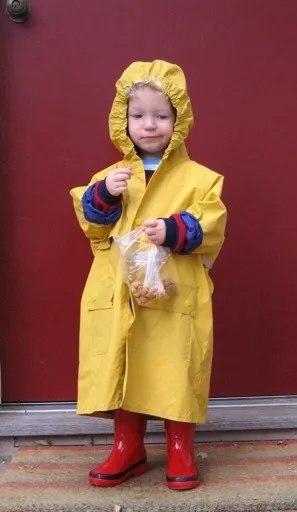
Coats. Shoes. Toileting. Pouring water from a jug without flooding the table. Carrying a tray. Wiping a spill and knowing where the cloths live. This is the area where progress is least visible to parents and most predictive of how a child will feel about themselves in Reception. 'He can get his own wellies on' is not a cute footnote. It's the point.
Social readiness
Which is not the same as being polite, or sharing nicely on demand. It's noticing another child is upset. It's waiting. It's saying no, and hearing no, without either child falling apart. It's asking an adult for help rather than shouting across the room. Turn-taking that comes from genuine interest lasts much longer than turn-taking enforced by a grown-up with a timer.
Problem-solving
Watch what happens in the wobbly moment: the tower topples, the zip jams, the puzzle piece won't sit. Does the child look again? Adjust? Ask? Walk away and come back? Or wait, eyes up, for a rescuer? Progress here shows up as a growing tolerance for that wobble — staying with a problem for a few seconds longer before seeking help.
What about the EYFS?
Montessori nurseries in England still work inside the Early Years Foundation Stage. There's the progress check around age two, ongoing assessment, and the conversations with your child's future school. Ofsted expects records and we keep them properly — we're not allergic to paperwork.
But the EYFS descriptors are outcomes, not a ladder a child climbs in step. A child can be meeting expectations in one area and miles ahead in another, and that's not a problem to be fixed. It's a person.
You'll probably spot it before we do
Parents almost always notice first. The shoes taken off and lined up without being asked. The sudden interest in pouring their own squash. The 'I did it' face. When you mention it at pickup, that's not a small thing to us — it goes in the record.
Better questions than 'where is she up to?'
- What did she choose to do today, and did she return to it later?
- What does she do when something doesn't work?
- Who does she seek out, and what are they doing together?
- What can she now do entirely alone that needed help in September?
- Is there anything you're worried about that I haven't raised?
That last one matters most. If something is niggling you at home, tell us early rather than politely waiting for a report.
From acorn to oak
A tree doesn't issue a yearly rating. The oak is present in the acorn the whole time, and nobody audits the acorn for falling behind. Our job is to keep the soil decent, the light good, and the conditions steady — and to write down honestly what we see growing.
Slow growth is still growth. Often it's the kind that holds.