A China Cup in a Toddler's Hands: The Quiet Lesson of Letting Them Carry It
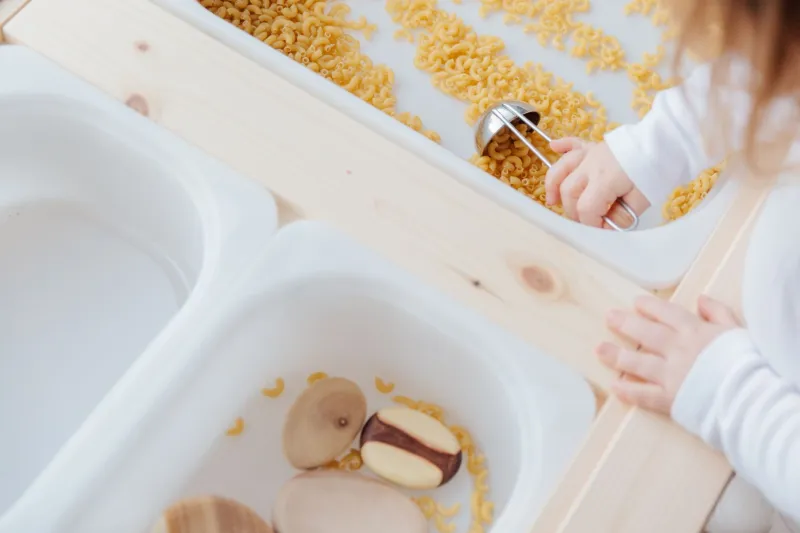
At our snack table, a two-year-old will pick up a small ceramic cup, hold it with both hands, and walk slowly towards a chair. Sometimes the cup wobbles. Sometimes water sloshes onto the table. Occasionally, a cup meets the floor and breaks. Visitors often ask, quite reasonably, why we do not simply use plastic.
It is a fair question. In the UK, we are used to safety-proofing childhood. Cups have lids, plates suction to tables, and sippy cups live in every changing bag. None of that is wrong. But at Little Oaks, we have come to see the humble china cup as one of the most useful pieces of learning equipment in the room.
Real materials ask something of the child
In Montessori thinking, materials should be real. A real cup has weight, a cool surface, a particular sound when it is set down. It does not bounce. That matters, because it gives the child honest feedback. A plastic cup can be flung, dropped, and dragged without much consequence. A china cup asks for two hands, a slower pace, and a bit of attention.
This is not about making toddlers anxious. It is about giving them something worth being careful with. When a child carries a real cup from the low shelf to the table, they are practising coordination, balance, and sequencing. They are also absorbing a message: you are capable of this. We trust you with something real.
What the break actually teaches
Let us be honest: cups break. That is not a failure of the child or the adult. It is a natural consequence, and in Montessori settings we call that a control of error. The cup is heavy, the floor is hard, and the result is immediate. No adult needs to lecture. The material has already done the teaching.
What matters is what happens next. If a cup breaks, our response is calm and practical. We keep children away from the shards, fetch the dustpan, and talk through what we are doing. Sometimes a child helps to hold the brush. Sometimes they simply watch. We might say, “The cup broke. Let us make the floor safe.” There is no shame, no dramatic sigh, and no pretending it did not happen.
That response teaches several things at once. It shows that accidents are survivable. It models care for the environment. It gives the child a role in putting things right. And it quietly introduces the idea that fragile things deserve respect, not fear.
The safety question, answered honestly
We are not cavalier about this. A nursery has to think carefully about risk, and in the UK we are used to risk-benefit thinking rather than blanket bans. We use small, sturdy cups rather than precious family heirlooms. Children sit at a low table. An adult is nearby. We do not allow running with cups, and we check for chips. The risk is small and supervised; the learning is rich and everyday.
There is also a difference between a genuine hazard and the ordinary bumps of growing up. A toddler carrying a small cup across a room is not the same as a toddler climbing a bookshelf. One is a manageable challenge with a clear purpose. The other is a fall waiting to happen. Montessori is not about removing all limits. It is about offering the right limits, with the right amount of support.
Mess is part of the curriculum
Parents often worry about spills, and I understand why. Nobody wants a kitchen floor that feels like a paddling pool at 7am. But spills are useful. A child who spills water can fetch a cloth, wipe the table, and try again. That is practical life in miniature: cause, effect, repair, repeat.
We keep a small cloth within reach at snack time. We pour from a little jug rather than a heavy bottle. We show the child how to hold the cup with two hands, and we resist the urge to grab it back every time it tilts. The aim is not a spill-free snack. The aim is a child who notices, adjusts, and keeps going.
Trying it at home without replacing everything
You do not need to swap every plastic plate for china. Start with one meal, or even one drink, and use a small ceramic cup that you are not emotionally attached to. Charity shops are excellent for this. Put it on a low shelf so your child can reach it. Keep a cloth nearby. Show them how to carry it with two hands, and let them walk slowly to the table.
A few practical touches help. A small jug makes pouring manageable. A tray contains the worst of the spills. A low table means your child can sit and stand without a long carry. And a calm adult face matters more than perfect technique. If a cup breaks, deal with the shards first and the feelings second. The lesson will keep.
Keep plastic for the park, the car, and the days when nobody has the energy for a science lesson. This is not an all-or-nothing philosophy. It is a gentle shift towards more trust and more real experience.
The trust is the point
When we hand a toddler a china cup, we are saying something bigger than “here is your drink.” We are saying, we think you can do this. We will help you when it goes wrong. You are part of this table, not a visitor to it.
That message settles into children. They stand a little taller. They carry a little more carefully. And when the cup breaks, as it sometimes will, they learn that care and repair belong together. That feels like a good lesson for a Tuesday morning, and for a good many years after it.