Bulbs in a Bucket: The November Lesson That Won't Bloom Until March
There is a particular sort of November afternoon in the UK — the kind that turns the sky the colour of a dishcloth by half past three and makes everyone want to draw the curtains. It's the month of muddy boots, half-term leftovers and the first serious conversations about whether the heating is on too high. It is also, quietly, the best month of the year to plant something.
Not something you'll see. Something you have to trust.
Why bulbs, and why now
Spring bulbs are the most forgiving gardening project you can hand a young child. They don't need sunshine, they don't need warmth, and they don't need a greenhouse or a raised bed. A handful of daffodils, crocuses or hyacinths pushed into a pot of compost on a November afternoon will do the rest themselves. By the time the days lengthen in March, you'll have flowers — and your child will have a small, concrete experience of something Montessori classrooms talk about all the time: delayed gratification.
In a childhood culture that increasingly offers instant everything — instant entertainment, instant answers, instant praise — a bulb is a small act of rebellion.
What the child is actually doing
Montessori called this kind of activity "practical life" — real work with real materials, done for a real purpose. Planting bulbs is a textbook example. The child is pouring compost, counting out bulbs, making a hole the right depth, covering it, watering gently. They are using their hands, sequencing steps, and taking responsibility for something living. None of it is pretend. All of it matters.
There's also the language. "Deeper", "gently", "under the soil", "roots", "shoots" — words that stick because they are attached to an action. In a Montessori setting, we often talk about the hand as the instrument of the mind; a bulb in the palm is a very direct way to prove it.
Setting it up at home (it takes twenty minutes)
You don't need a garden. A doorstep, a balcony or a windowsill will do. Here's the simplest version:
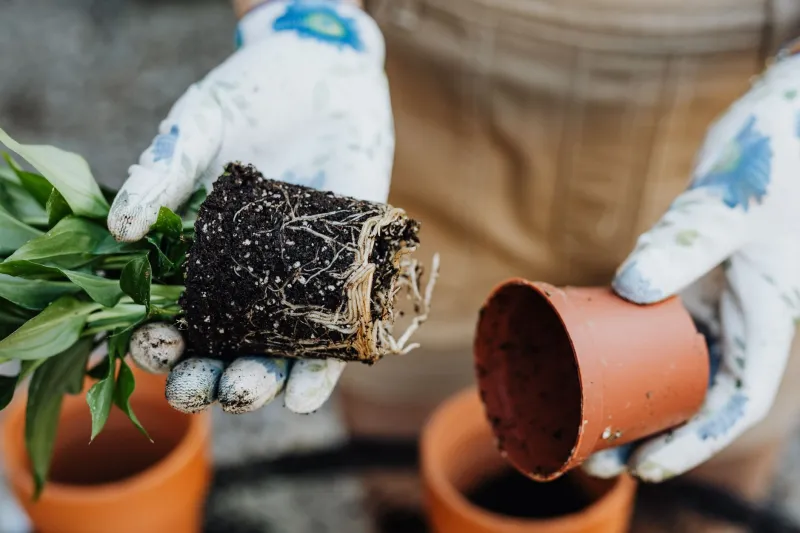
- A pot with drainage holes (terracotta or plastic — anything about 20–25cm across will hold five or six daffodils).
- Peat-free compost. Most UK garden centres have moved away from peat now, which is good news for everyone.
- Bulbs. Daffodils, crocuses, muscari or hyacinths are all reliable. Tulips work too, but they prefer a colder snap.
- A small trowel or a spoon, and a watering can with a rose.
Fill the pot two-thirds full. Let your child press the bulbs in, pointy end up, about twice their own depth apart. Cover with compost, leaving a couple of centimetres below the rim. Water gently until it just runs out of the bottom. Put the pot somewhere cold and dark — a shed, a garage, or against a north-facing wall — and check it every couple of weeks. When green shoots appear, move it somewhere lighter.
A safety note, because it matters: daffodil and tulip bulbs are not for eating. They can cause tummy upsets if swallowed, so this is a supervised job, and hand-washing afterwards is part of the routine. Little Oaks children are well used to the "wash hands after gardening" rule.
The waiting is the lesson
Here's where it gets interesting. The planting is the easy part. The waiting is the work.
Children are not naturally patient — and nor are adults. A bulb asks something unusual of both of you: to do a job properly and then leave it alone. You can't rush it, you can't check it every five minutes, and you can't make it grow by worrying. You can only water it, keep it cold, and trust.
At home, it helps to make the waiting visible. A simple calendar with a sticker for each week, or a "bulb diary" with a drawing every fortnight, gives a child a way to mark time. When the first shoot appears — usually around February — the excitement is genuine, because it has been earned.
The acorn-to-oak idea
At Little Oaks Montessori, we talk a lot about the acorn-to-oak principle: that a small beginning contains everything it needs to become something much larger. November is the perfect month to see that idea in action. You put a wrinkled brown bulb in the ground, and for weeks there is nothing to show for it. Then one morning there is a green tip, and eventually a flower.
Childhood works the same way. So much of what a child is learning is happening underground — the language they are absorbing, the motor skills they are refining, the social rules they are piecing together. It isn't always visible. It doesn't always produce a certificate or a sticker. But it is happening.
Planting a bulb with a child is a gentle reminder of that. It says: we do the work, we take care, and we trust the process. The flower will come when it comes.
A small ritual for a grey month
November can feel like a waiting room — for Christmas, for lighter evenings, for the garden to wake up. A pot of bulbs gives that waiting a shape. It's a job to do together, a reason to go outside, and a promise that something good is on its way.
You don't need much. A pot, some compost, a handful of bulbs and twenty minutes. Plant it now. Forget it until spring. Then watch what happens — not just in the pot, but in the child who planted it.