When the Sky Is Grey, the Learning Is Rich
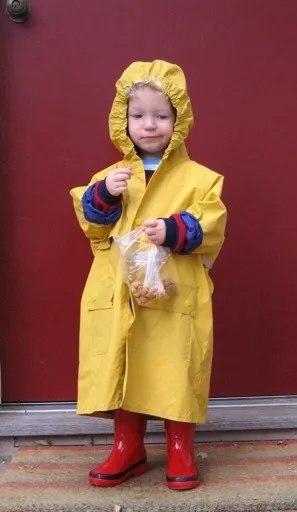
Photo: Jim Grandy, CC BY 2.0, via Wikimedia Commons
There is a particular kind of British drizzle that seems designed to ruin a nursery morning. It is not dramatic. It does not arrive with thunder and lightning. It simply hangs in the air, greys the windows, and makes everyone wonder whether it is worth going outside at all. At Little Oaks Montessori, we think that is exactly the moment to reach for the puddle suits.
This is not a quirky preference for mud. It is a view about what the outdoors is for. In Montessori thinking, the environment is the teacher. The prepared environment is not limited to the shelves inside the room. It includes the garden, the path, the puddles, the cold air on a child’s cheek, and the pinecone that is wet and slippery and much more interesting than the one on the table. If we only go outside when the weather is pleasant, we are not really treating the outdoors as a classroom. We are treating it as a reward.
The weather is not the enemy—the clothing is
There is an old saying, often repeated in outdoor nurseries: there is no such thing as bad weather, only unsuitable clothing. It is a bit tidy for real life, but it is close enough to be useful. Children do not dissolve in rain. They get cold and miserable when they are wet through, and they get hot and cross when they are overdressed. Give them proper waterproofs, warm layers and wellies with room for thick socks, and ordinary British weather becomes a manageable part of the day.
That matters because the alternative is worse. A child who is kept inside at the first grey cloud learns that the outdoors is fragile, optional, and only for good behaviour. A child who is helped into a puddle suit learns something different: the world is interesting in all weathers, and I can be comfortable in it.
What wet play actually builds
Outdoor learning in the rain is not a break from learning. It is learning with the volume turned up. When a child steps into a puddle, they are taking a small, manageable risk. They are testing the ground, judging depth, and finding out what happens next. That is resilience in its most ordinary form—not a motivational poster, but a pair of boots and a bit of courage.
It builds sensory awareness too. Rain sounds different on a hood than on a leaf. Mud has a texture that changes with the amount of water. Cold air makes the nose run and the cheeks pink. For young children, these are not distractions from the curriculum. They are the curriculum. Language grows around them: squelch, drizzle, slippery, damp, chilly, heavy, light. Practical life grows too: pulling on boots, hanging up a wet suit, carrying a trowel, washing muddy hands, putting gloves on a radiator.
And then there is independence. A Montessori day is full of small acts of self-care, and wet weather is full of them. Zips, velcro, sleeves, soggy socks, a hood that will not sit right. None of it is glamorous. All of it is real work. A child who can dress for the rain is a child who is learning to look after themselves.
Why ‘outdoors as a reward’ misses the point
Some nurseries use outdoor time as a treat. Finish your activity, and you can go outside. Be good, and you can have ten minutes in the garden. Be careful, and we will stay in where it is dry. We understand the instinct. Outdoor time is lovely, and it can be used as leverage. But the message is backwards. The outdoors is not a reward for finishing indoor work. It is part of the work.
In a Montessori setting, the outdoor area is another prepared environment. It should be available daily, not only when the sun shines. It should be planned for, not offered as a fallback. It should have real things to do: digging, planting, carrying, climbing, building, watching, caring for plants, and yes, splashing. It should also have adults who are willing to go out in the rain themselves. Children notice whether the grown-ups believe what they say.
What to look for in a nursery
If you are choosing a nursery and the outdoors matters to you, ask questions that go beyond the brochure. Do children go outside every day? What happens in heavy rain? Do staff go out too, or do they watch from the doorway? Is there a covered area, a drying space, and a supply of spare waterproofs? How do they handle a child who hates the feel of a puddle suit? How do they balance risk and safety without wrapping everyone in cotton wool?
A good nursery will not pretend that wet weather is easy. It will talk about drying kit, changing routines and the occasional child who needs time to warm to the idea. But it will also have a clear position: the outdoors is part of the day, not a prize. Ask whether outdoor time is ever removed as a punishment. If the answer is yes, listen carefully to the reasoning.
Dressing for the elements: a practical kit list
You do not need specialist gear for every child. You need a system that works for your family and your hallway. A waterproof all-in-one puddle suit is more useful than a smart coat for nursery days. Wellies should have room for thick socks and should be easy for your child to pull on. Layers are better than one thick jumper, because British weather changes its mind by lunchtime. A waterproof hat and gloves make a surprising difference on a cold, damp morning.
Keep a named spare bag at nursery: socks, trousers, a top, and a full change of clothes. Label everything, including the wellies. Practise zips and sleeves at home when you are not rushing. Let your child carry their own bag if they can. It takes longer, but it builds the habit. In summer, remember that rain gear is not the only kit; sun cream and a hat matter too.
Most importantly, try not to treat wet weather as a crisis. Children pick up our tone. If we sigh and say the day is ruined, they learn that grey skies are a disappointment. If we say, ‘It is a puddle day—let’s get your suit,’ they learn that weather is something to work with.
The muddy truth
Rainy days are not the enemy of a good nursery day. They are some of the richest days we have. They are noisy, tactile, slightly chaotic, and full of small decisions. They ask children to be capable, and then they let them be capable. That is not a distraction from Montessori. It is Montessori, with wet socks.
If you are looking at nurseries this year, watch what happens when the forecast is grim. Does the garden go quiet? Do the puddle suits stay on the hook? At Little Oaks Montessori, we would rather see a line of small, waterproofed children heading out into the drizzle than a room full of clean shoes and restless faces. The sky is grey. The learning is rich. Go outside.