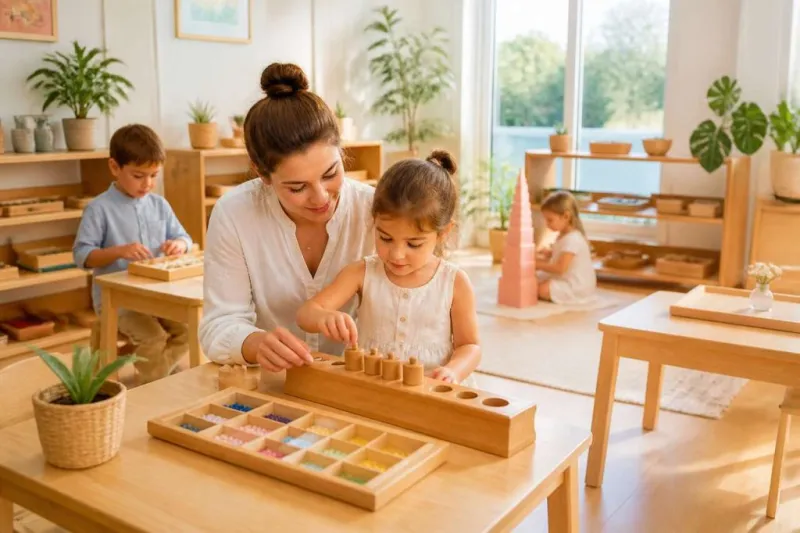
Small Hands, Big Work: Why Peeling a Satsuma Beats Flashcards at Nursery
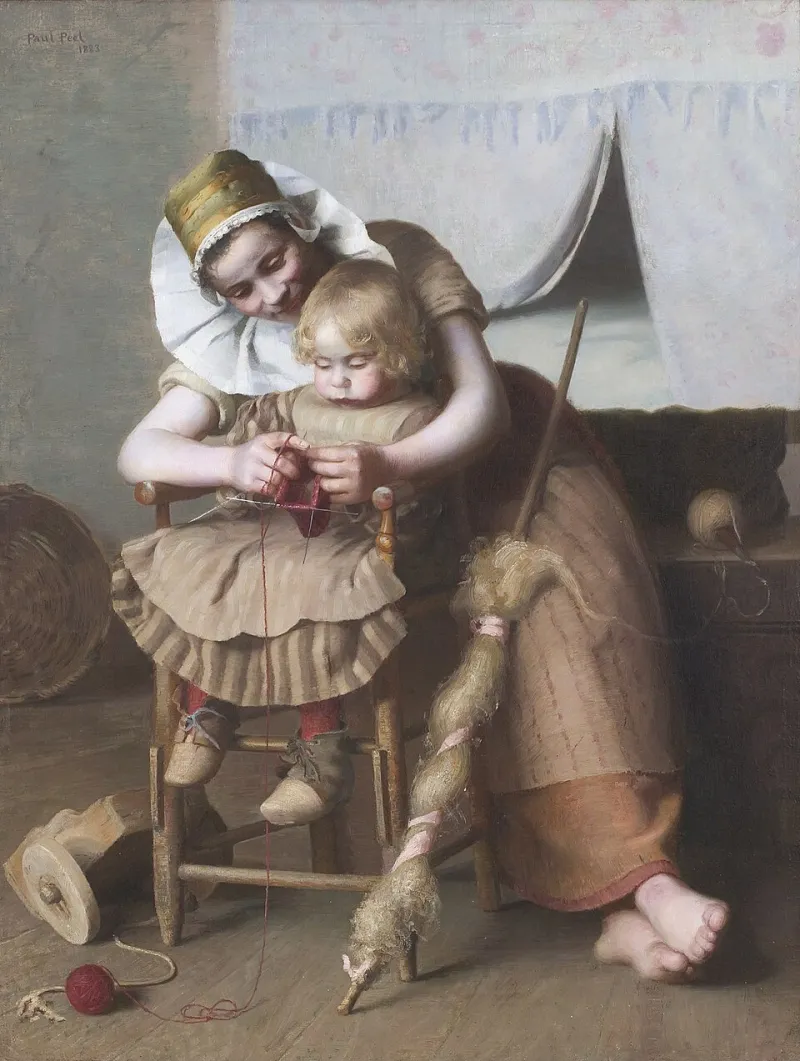
Photo: Paul Peel, Public domain, via Wikimedia Commons
Every autumn, the same conversation appears in UK parent groups. Someone has seen a nursery advertising daily phonics, French club and a mini coding class for three-year-olds, and wonders whether their child is falling behind. It is easy to understand the pull. We all want our children to have opportunities. But in the race to look academic, it is easy to overlook the quiet work that actually builds the foundations: peeling a satsuma, pouring water, wiping a table, putting on a coat.
At Little Oaks Montessori, the satsuma is not a cute craft. It is work. A child finds the seam, pushes a thumb in, peels back the skin, separates the segments, and maybe offers one to a friend. That sequence takes coordination, patience and a plan. It also takes trust from the adult, who has to resist the urge to do it faster. For a two- or three-year-old, that is a significant achievement. No worksheet can replicate it.
The satsuma is not a snack. It is a piece of work
Watch a young child peel a satsuma and you will see concentration in its purest form. The tongue comes out. The brow furrows. The rest of the room fades. This is not because the fruit is magical, but because the task is real, has a clear beginning and end, and belongs to the child. In Montessori terms, it has a purpose and a control of error: if you pull too hard, the peel tears; if you rush, juice goes everywhere. The child can see and feel how it is going, without an adult marking it.
Practical life activities are often mistaken for chores. They are not. They are the building blocks of independence. When a child carries a glass jug of water to the snack table, they are learning to steady their body, judge distance and recover from a spill. When they wipe the table, they are learning sequence and care for the room. When they put their shoes on, they are learning that they are capable. These small moments add up to a child who thinks: I can try that.
What progress actually looks like
Parents often ask for evidence. We understand. In a nursery, progress is not a score. It looks like a child who watches someone else peel fruit for a week, then tries the first bit themselves. It looks like a child who pours water and stops before it overflows, then goes back for a cloth when it does. It looks like a four-year-old showing a younger child where the aprons live. It looks like a child who says, I need help, rather than dissolving because the zip will not cooperate.
These are not small things. They are the roots of literacy and numeracy, even though they look nothing like a lesson. Pouring water builds hand-eye coordination and an understanding of volume. Peeling fruit strengthens finger control. Setting a table involves one-to-one correspondence. Wiping a table teaches left-to-right sequence, which is a quiet precursor to reading and writing. The academic stuff will come. The foundations are being laid now.
The flashy extras trap
I am not against enrichment. Music, movement, stories and messy play all have a place. But there is a difference between a rich early-years environment and a crowded one. A three-year-old does not need a timetable packed with adult-led classes. They need time to choose, repeat, make mistakes and finish. They need adults who observe rather than direct. They need real objects, not just screens and plastic replicas.
When a nursery promises accelerated phonics or formal handwriting for under-fives, it is worth asking what gets squeezed out. Sometimes it is free play. Sometimes it is outdoor time. Sometimes it is the simple, slow work of learning to be a person in a group. The UK's early years framework is clear that play and independence matter. A child who can focus on peeling a satsuma for ten minutes is building the same attention they will later need for reading. The satsuma is not a distraction from learning. It is learning.
Carrying it home without turning your kitchen into a classroom
You do not need to buy Montessori materials to bring this home. Start with what is already in your kitchen. Put a small jug of water on a low tray and let your child pour their own drink. Keep a cloth within reach. Let them peel a satsuma, a banana or a boiled egg, even if it takes longer and makes a mess. Invite them to wipe the table, carry their plate to the sink, or help load the washing machine. These are not rewards or chores. They are participation.
The trick is to prepare the environment and then step back. A child-sized jug is easier than a heavy one. A low hook for their coat makes independence possible. A sponge cut in half fits small hands. Resist the urge to correct every spill or finish the job. If water goes on the floor, say, the cloth is there, and let them help. You are not aiming for a perfect table. You are aiming for a child who feels trusted.
The quiet confidence bit
At Little Oaks, we see this every day. The child who arrives shy in September and by November is helping to set the snack table. The child who could not manage their coat in the autumn and is zipping it up by spring. The child who peeled one satsuma and then wanted to peel every satsuma in the bowl. None of this appears on a flashcard. All of it builds the curious, capable mind we want for the future.
So when you are comparing nurseries in 2026, look past the extras for a moment. Ask what the children do with their hands. Ask how long they get to do it. Ask what happens when they spill. The answers will tell you a lot about the kind of adults they are becoming—and about the quiet, ordinary magic of a satsuma.