The Potty by the Window: Toilet Learning Without the Sticker Chart
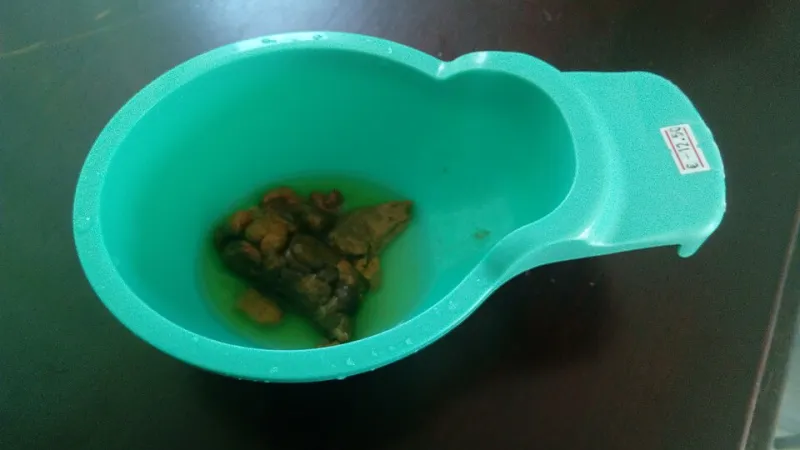
Photo: Donald Trung Quoc Don (Chữ Hán: 徵國單) - Wikimedia Commons - © CC BY-SA 4.0 International.(Want to use this image?)Original publication 📤: --Donald Trung 『徵國單』 (No Fake News 💬) (WikiProject Numismatics 💴) (Articles 📚) 19:00, 25 August 2019 (UTC), CC
There is a potty sitting by the window in our toddler room. It has been there since September. Nobody has been marched over to it, nobody has been timed on it, and nobody has been handed a sticker for using it. It is simply part of the room, the way the small jug is part of the snack table and the dustpan is part of the cleaning shelf.
Parents often ask us, slightly anxiously, when we are going to 'start'. The honest answer is that we have already started - we just don't announce it. Toilet learning, in a Montessori setting, is less of an event and more of a slow loosening of dependence. It has more in common with learning to carry a cup across a room than with passing a driving test.
What we mean by toilet learning
You will hear the phrase 'potty training' everywhere: in supermarkets, on parenting forums, in well-meaning comments from relatives. Training implies a trainer, a trainee, a programme and a finish line. Learning implies something messier and far more durable.
In practice, this means we are not trying to get a child out of nappies by a particular date. We are trying to build the skills, the body awareness and the confidence that make nappies unnecessary. Those things arrive in their own time, usually somewhere between eighteen months and three and a half years, and pushing at the earlier end of that range rarely saves anyone time in the long run.
The readiness signs nobody puts on a poster
The usual checklist - dry for two hours, interested in the loo, able to pull trousers down - is a decent starting point. But the signs we watch for are quieter than that.
- They notice. A child who pauses, looks down, or tells you they are going, is beginning to connect sensation with outcome. That is the whole foundation.
- They want to do the undressing. Not the wiping yet, necessarily, but the tugging at waistbands. If they are fighting to do it themselves, that is not defiance. That is readiness, wearing a slightly awkward costume.
- They care about wetness. A toddler who is unbothered by a wet nappy is not necessarily behind. But one who has started to find it uncomfortable is telling you something.
- They imitate. Following you into the bathroom, sitting on the closed lid, flushing it eleven times for the joy of it. All of it counts.
None of these signs require you to do anything dramatic. They require you to notice, and then to make the equipment available.
Practical life, or why wiping a table helps
This is the part that surprises most parents, and it is the part we are quietly proudest of. Toilet learning is not really a bathroom skill. It is a self-care skill, and self-care sits inside the same family as pouring water, buttering toast and wiping a table.
Every time a child in our room sponges a spill, they are practising the sequence: notice the problem, fetch the right tool, apply effort, check the result. Every time they peel a satsuma, they are strengthening the hands that will later manage a zip and a waistband. Every time they choose their own apron from the hook, they are rehearsing the same independence they will need to choose the loo over a nappy.
So if you want to help a child who is not yet ready for the potty, you could do far worse than hand them a cloth. The plumbing comes later. The capability comes first.
What we don't do
We do not sit children on a timer. Bodies do not work to a schedule imposed from outside, and a child who is placed on a potty every twenty minutes learns to wait to be placed, not to notice their own signals.
We do not offer rewards. A sticker, a chocolate button or a small toy all say the same thing: this is unpleasant work, and here is payment. Toilet learning is not unpleasant work. It is an ordinary part of being a person, and the satisfaction of doing it belongs to the child, not to a chart on the fridge.
We do not celebrate loudly. A quiet 'you did it' and a hand to help with trousers is plenty. Big cheers turn a bodily function into a performance, and performances invite wobbles.
Puddles are data, not disasters
Accidents happen. In our experience they are the single most useful thing that can happen, because they tell us where the child is up to. Did they notice halfway through? Not at all? Did they tell you straight afterwards with real distress, or shrug and carry on?
Our response is the same every time: no sigh, no fuss, no 'oh dear'. We say something neutral - 'you've had a wee, let's get some dry clothes' - and the child helps fetch the bag, the trousers, the cloth. The accident becomes a practical life activity rather than a small shame.
Partnering with nursery
Toilet learning goes sideways fastest when home and nursery are doing different things. So here is what genuinely helps us.
Tell us your approach. If you are trying something at home, say so at drop-off. Five sentences is enough. We will match it.
Send spare clothes. Several sets. Not because we expect disaster, but because a child who knows there are dry trousers available relaxes. A child who knows there are not, clings.
Share the language. If you call it a 'wee' at home, we will call it a 'wee'. If the potty has a name, tell us. Consistency of words matters more than most people realise.
Don't ask for progress reports at the door. We will tell you anything worth telling. A daily 'did they do it?' puts pressure on a process that does not respond well to pressure.
Flag regressions early. A new baby, a house move, a return to work after parental leave - any of these can send a child briefly backwards. That is normal and it passes. Knowing about it means we can be gentler.
When progress stalls
It stalls. Almost always. Usually for a week or two, sometimes for a couple of months, and occasionally right in the middle of a term when you had convinced yourself it was all sorted.
Our advice is almost always the same: pause without announcing it. Keep the potty in the room, keep the nappy on if that is what reduces the stress, and turn your attention to something else entirely for a fortnight. Read more books. Make more soup together. Go to the park in the rain.
If a child has been consistently dry and then stops, look for a change first - illness, teeth, a new room at nursery, a shift in routine at home. If nothing has changed and the stall lasts beyond a couple of months, or if you are seeing real distress, pain or withholding, that is a conversation with your health visitor or GP rather than a conversation with us. There is no shame in either.
The longer view
Nobody arrives at secondary school in a nappy. That sentence sounds flippant, but we mean it kindly. Toilet learning is one of the first places where parents are invited to feel behind, and it is one of the first places where it becomes clear that children are not on a shared timetable.
The potty by our window has been used by a great many children this term, in a great many ways, and not one of them was given a sticker for it. They did it because they could, because the room made it easy, and because the adults around them trusted them to get there.
If you would like to talk through how we handle any of this in the toddler room, or what your child is working on at the moment, our door is open. Bring the questions. Leave the charts at home.