From Cheerleader to Mirror: How Encouragement Sounds Different at Home

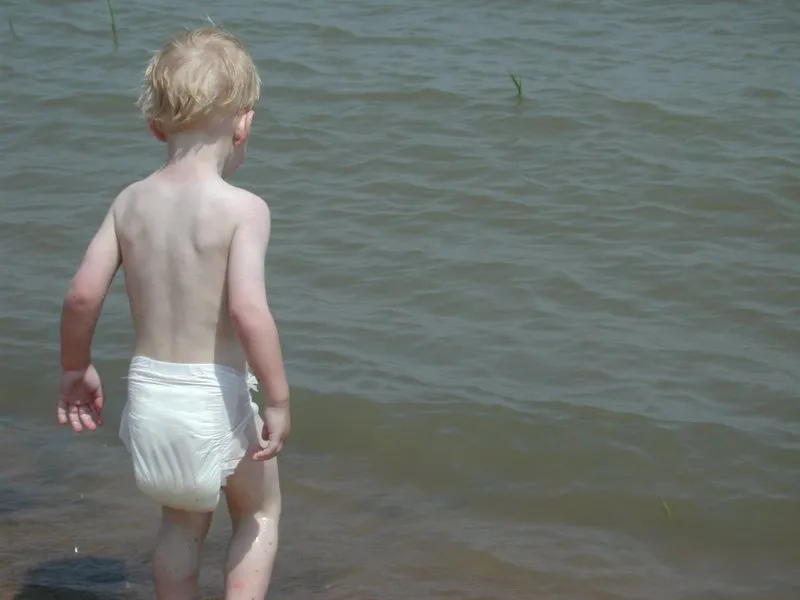
Photo: James T M Towill , CC BY-SA 2.0, via Wikimedia Commons
The gold-star economy starts at the kitchen table
It usually begins innocently. A child carries their wellies to the door and we say, “Good job!” They finish a wobbly drawing and we say, “Good job!” They eat three peas and we say, “Good job!” By teatime the phrase has worn thin. The child learns something subtle: the important part of an activity is the adult’s reaction. Not the squelch of the boot, not the line that became a dinosaur, not the feeling of being hungry and then full.
At Little Oaks Montessori, we are not anti-praise. We are anti-white-noise. A child who hears “good job” fifty times a day cannot tell which effort actually mattered. Was it the carrying? The choosing? The waiting? The trying again? Generic approval is like a weather report that always says “fine” — pleasant, but useless for deciding what to wear.
Praise is a verdict. Encouragement is a mirror.
Praise tends to judge from above: “You’re so clever,” “What a good girl,” “Amazing!” Encouragement describes what we see: “You kept going when the tower wobbled.” “You noticed the red paint ran into the blue.” “You carried your plate all the way to the sink.”
The difference is not just wording. Praise hands the child a label. Encouragement hands back a mirror. It says: look at what you did, notice how you did it, decide how you feel about it. That is the beginning of a compass — an internal sense of “this matters to me” rather than “will this please them?”
Dr Maria Montessori wrote about the child’s need for independence, not applause. In a Montessori nursery, you will hear adults describing rather than grading. “You chose the blue cup.” “You screwed the lid on by yourself.” “You waited for your turn.” It sounds almost flat at first, especially if you are used to enthusiastic cheerleading. But watch the child’s face. They are not waiting for a score. They are checking in with themselves.
Three ordinary moments to try it
The rainy-school-run wellies. Instead of “Good job putting your boots on,” try “You pulled them on and stamped them down yourself.” If they get the left and right mixed up, resist the rescue for a second. “You noticed they felt funny. Which foot might be happier?” The aim is not perfect footwear. It is a child who can listen to their own body and adjust.
The kitchen-table painting. Instead of “That’s beautiful,” try “You used the brush on its side there. What happened?” Or “You mixed red and blue — tell me about that bit.” You are not refusing to enjoy the painting. You are letting the child be the author of its meaning. If they say “It’s a muddy puddle,” agree. It probably is.
The satsuma at snack time. Instead of “Well done for peeling it,” try “You got your thumb under the skin and kept going.” Or simply “You did it.” Let the silence sit. The child does not need a medal for peeling a satsuma. They need the feeling of the peel coming away in their hands.
A phrase bank for the fridge
You do not need to memorise a script. A few reliable openings will do:
- “You kept going.”
- “You found a way.”
- “You noticed…”
- “You chose…”
- “Tell me about how you did that.”
- “You look pleased with that.”
- “That was tricky. You didn’t give up.”
- “What did you learn?”
Notice how many start with “you.” That is deliberate. The child is the subject of their own story, not the object of our review.
When “good job” is actually fine
There is no need to ban the phrase or police your partner at the door. Praise has a place. “I love watching you play” is warm and honest. “I’m glad you’re here” is not a judgement. “That made me laugh” is genuine connection. The problem is not a single “good job” on a Tuesday. It is when approval becomes the main soundtrack.
Also, be wary of “I’m so proud of you” as the default. It is not wrong, but it quietly centres the adult’s feelings. Try “You must feel proud of yourself” instead. If that sounds awkward, start with “You look proud.” The child can agree, disagree, or shrug. All three are useful.
The long game
A child who is used to encouragement will still enjoy a gold star. They are human. But they will not need it to start a puzzle, carry a plate, or try again with the left welly. They will have their own reasons.
At home, this is not another job to add to the list. It is a small edit to the words you already say. Swap one “good job” today for a description. See what happens. Often the child will explain their thinking, or simply nod and carry on. Either is fine. The compass is being built quietly, one noticed effort at a time.